Kidney Stone Treatment with RIRS Method
Retrograde Intrarenal Surgery (RIRS) is a minimally invasive method based on advanced technologies that stands out today in the “non-surgical” treatment of kidney stones. In this technique, the kidney is reached through the urinary tract without making an incision on the skin, and the stones are broken down with a laser and removed from the body naturally. RIRS, which offers a high success rate, especially in stones up to 2 cm, has developed in recent years to be effective in large stones.
This method, where patients can be discharged on the same day and does not require surgical incisions and stitches, is a strong alternative for those looking for “non-surgical stone treatment” thanks to its low risk of complications and aesthetic advantages. Thanks to new generation laser systems, robotic surgical supports and flexible ureteroscopes, RIRS is increasingly preferred as a comfortable, safe and high-success modern treatment method.
Contents
- The New Face of Surgery in Kidney Stones: Stone-Free Life with Minimally Invasive Methods
- What is RIRS and How is it Applied? – New Generation Approach in Non-Surgical Stone Treatment
- What is RIRS? – The New Name of Non-Surgical Stone Treatment in Modern Urology
- Advantages of RIRS – Comfortable, Aesthetic and Effective Stone Treatment
- Who is RIRS Suitable for? – The Choice of Those Seeking Non-Surgical Comfort
The New Face of Surgery in Kidney Stones: Stone-Free Life with Minimally Invasive Methods
Those who have suffered from kidney stones know; The pain sometimes competes with labor pain. In the past, it was necessary to endure open surgeries and long hospitalizations to get rid of these stones. But those days are gone now. Thanks to minimally invasive surgeries , kidney stone treatment has become much more comfortable, safe and faster.
So what is this “minimally invasive”, how does it work, and to whom is it applied? Let’s take a look together.
What Does Minimally Invasive Surgery Mean?
While the body is entered through large incisions in classical surgeries, everything is done either through a very small incision or naturally (for example, the urinary tract) in minimally invasive surgeries. This means:
- Less pain
- Shorter hospital stay
- Faster recovery
- Less risk of bleeding
RIRS (Retrograde Intrarenal Surgery)
It’s like technological magic! It is entered through your urinary canal and reached the kidney. The stone is broken on site with a laser. Neither knife marks nor stitches.
- It is most preferred for small-medium stones (up to 2 cm).
- It is possible to clean multiple stones at the same time.
- Usually discharged on the same day
PCNL (Percutaneous Nephrolithotomy)
If the stone is large (larger than 2 cm), this method comes into play. A 1 cm hole is made in your back to reach the kidney directly and the stones are broken there.
Mini-PCNL & Micro-PCNL
Think of the more “minis” of the classic PCNL. The hole diameter is smaller, the tissue damage is less. Recovery time is shorter. It is generally ideal for 1.5–2 cm stones.
Thanks to minimally invasive surgeries, kidney stone treatment is no longer a nightmare. You can usually stand up within 1-3 days and return to normal life within a few weeks. You don’t need to be confined to bed for months like you used to.
If you have kidney stones, surgery is no longer a last resort. With modern methods, it is possible to go through this process less painfully, faster and safer . Thanks to options such as RIRS and PCNL, a “stone-cold” life awaits you!
What is RIRS and How is it Applied? – New Generation Approach in Non-Surgical Stone Treatment
As technology advances rapidly in the treatment of kidney stones, “bladeless” options, that is, those that do not require incisions, have now become possible for patients. One of these options is RIRS (Retrograde Intrarenal Surgery), the rising star of recent years. Especially for patients who have a fear of surgery or aesthetic concerns, RIRS attracts attention with its comfort and success.
What is RIRS? – The New Name of Non-Surgical Stone Treatment in Modern Urology
For those looking for non-surgical solutions in the treatment of kidney stones, there is a method that has shined in recent years: RIRS, or Retrograde Intrarenal Surgery. This technique stands out as a minimally invasive procedure in which the kidney is reached using the body’s natural pathways without the need for incisions and the stones are broken with a laser.
RIRS (Retrograde Intrarenal Surgery) is a modern kidney stone treatment performed using completely natural ways of the body, without any incisions on the skin. This method, which stands out with its aesthetic advantage, short recovery time and high success rate, is just as comfortable to apply.
No incisions, lots of comfort
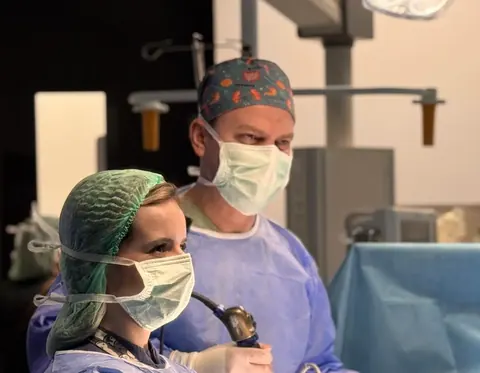
RIRS allows access to the bladder through the urinary tract (urethra) and from there to the kidney via the ureter. Thanks to the flexible ureteroscopes used during the procedure, it is possible to access even the stones at the most extreme points of the kidney. With laser technology, stones are broken into millimetric pieces and the body naturally removes these pieces. For this reason, RIRS is referred to as “non-surgical stone treatment”.
Advantages of RIRS – Comfortable, Aesthetic and Effective Stone Treatment
Retrograde Intrarenal Surgery (RIRS) stands out as a modern method that emphasizes both patient comfort and treatment success in today’s urology. Especially for those looking for “non-surgical stone treatment”, RIRS surpasses classical surgical methods in many respects.
- Incisionless and Scarless
- Quick Recovery – Short Hospital Time
- Low Risk of Complications
- Technology Compatible – Laser Assisted
- Effective on Different Stone Types
- Safe Option in Patients with a Single Kidney
In short, RIRS is one of the most attractive options today for patients who want aesthetic, safe and comfortable stone treatment. This method, which makes you say “Stone treatment is no longer a process to be feared”, is becoming more and more widespread day by day with technological support.
Who is RIRS Suitable for? – The Choice of Those Seeking Non-Surgical Comfort
RIRS (Retrograde Intrarenal Surgery) has become a primary choice for those seeking incision-free comfort in kidney stone treatment in recent years. RIRS, which has become applicable to a wider range of patients, especially thanks to technological developments, offers less risk and more comfort compared to classical surgery. So who is this method suitable for?
- Those with Kidney Stones Up to 2 cm
- Those with Fear of Surgery or Aesthetic Concerns
- Those Who Can’t Be Moved with ESWL
- Those at Risk of Bleeding or Using Blood Thinners
- Those with a Single Kidney
- General Condition Not Suitable for Surgery
As a result, RIRS is a modern and safe treatment option that can be effectively applied not only to small stones but also to larger and more difficult stones. RIRS is one of the most comfortable methods offered by contemporary urology for all patients who are looking for a non-surgical solution, thinking aesthetically, and wanting to shorten the recovery time.
This page is for general information only. Always consult your doctor for diagnosis and treatment.

Related guide articles

Related treatments

Laser Ureteral Stone Treatment in Turkey
Read more