
Varicocele Treatment in Turkey
Varicocele treatment is a comprehensive treatment approach that aims to correct the circulatory disorder caused by enlarged veins (veins) in the scrotum (around the testicle) with surgical and non-surgical methods. Varicocele is one of the common causes of male infertility and can cause pain, testicular shrinkage and negative changes in sperm parameters.
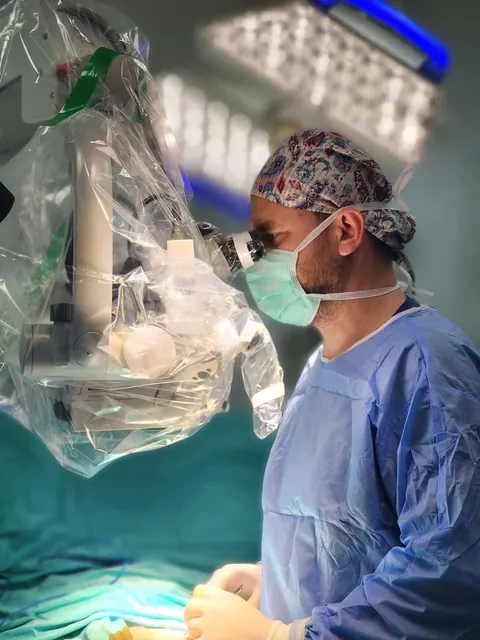
Varicocele treatment in Bursa is planned with the patient’s clinical findings, physical examination and, if necessary, Doppler ultrasound evaluation. Among the treatment options, microsurgical varicocelectomy comes to the fore, especially in patients with complaints of deterioration in sperm parameters or pain. In this context, bursa varicocele surgery is performed by ligation of enlarged veins around the testicle under a high-resolution surgical microscope and aims to protect the vein and lymphatic structures while minimizing complication rates.
Treatment costs and surgical method to be applied; The degree of varicocele is determined after the examination after evaluating the patient’s general health status and the planned treatment technique. For detailed information and to be evaluated about bursa varicocele treatment , you can contact us from the contact options below.
Get Information on WhatsApp Get Information by Phone 5,0· 107 Google reviews
Contents
- What is varicocele?
- What causes varicocele?
- What are the symptoms of varicocele?
- How is varicocele diagnosed?
- What are the varicocele treatment methods?
- How is microscopic varicocele surgery performed?
- What should be considered after varicocele surgery?
- Frequently asked questions about varicocele
- Varicocele Treatment in Bursa, Turkey
What is varicocele?
Varicocele can be defined as the varicose-like enlargement and swelling of the veins that carry deoxygenated blood from the testicles, called the pampiniform plexus. Varicocele is an important health problem that can be seen worldwide and affects men. Although it does not pose a life-threatening risk, it can negatively affect a person’s daily life and can be seen as an important risk factor, especially for men who want to have children. Although it generally does not cause serious health problems, it can sometimes cause pain or shrinkage of the testicles.
The male reproductive cell that fertilizes the female egg is known as sperm. The reproductive system in men is responsible for the production, storage, and transport of sperm. A healthy man has 2 testicles, and in men, sperm is stored in the testicles, which also synthesize testosterone hormone. When ejaculation occurs in men, the protective fluid secreted from the prostate forms semen and is expelled through the penis. For healthy sperm production and storage, the temperature in the testicles must be lower than body temperature. The scrotum supports healthy sperm production by keeping the temperature in the testicles constant.
In varicocele, the veins in the scrotum enlarge, causing the testicles to heat up more than they should, which can lead to decreased sperm production and reduced sperm quality. Varicocele is usually encountered during and after puberty. Clinical diagnosis of the disease is easy. The enlargement of veins on the testicular skin can be seen with the naked eye. Usually, the exact cause of the disease cannot be found. However, not every man diagnosed with varicocele needs treatment. However, surgical intervention may be required for enlarged veins that are large enough to affect fertility or cause discomfort to the person.
What causes varicocele?
The exact cause of varicocele is not fully known. However, it is predicted to occur as a result of the interaction of various risk factors. Risk factors that may cause varicocele include: the body’s vascular structure, the functions of valves within the collecting veins, and genetic predisposition. Physical factors affecting varicocele formation include: anatomical structure, body positions, hormonal changes, intra-abdominal pressure, venous insufficiency, and weak vessel walls.
The effect of these risk factors may be different in each person. It is also possible for these factors to be seen together. Varicocele can be seen at any age, but it usually begins after puberty and can prevent the testicles from developing properly. Varicocele is mostly seen in the left testicle, but it can also be seen bilaterally. The possibility of being seen only on the right side is low. The fact that the discomfort is usually observed on the left side is due to various anatomical factors.
What are the symptoms of varicocele?
Since varicocele causes mild symptoms, it may often go unnoticed. It may not cause symptoms in many patients. However, the symptoms include: testicular pain, feeling of heat in the testicles, and swelling. Especially over time, the enlargement in the veins due to varicocele becomes prominent enough to be noticed from the outside. Usually, varicocele is investigated in men in cases of infertility of unknown cause.
We can mention some important symptoms of varicocele as follows:
- Varicocele usually develops unilaterally. Usually, a soft swelling can be observed on the left side and above the testicle. The swelling may appear as a worm-like structure due to the enlargement and twisting of the veins.
- Shrinkage may be observed in the testicle affected by varicocele.
- Pain and discomfort that worsens in hot weather or after exercise may be felt.
- Infertility may be observed
- Vascular enlargement that can develop due to standing for long periods
- Observation of swelling in the testicular skin
- Persistent pain or feeling of heaviness that can be observed in the testicle, groin, or scrotum
Varicocele symptoms may vary according to the severity of the disease.
Grade classification is made to determine the severity of the disease. We can mention this classification as follows:
Grade 1: This is a varicocele condition where no symptoms are observed in the patient and can only be detected by palpation when examined standing.
Grade 2: This is a varicocele picture that can be examined standing and detected by hand. This is the condition where the veins can be clearly seen.
Grade 3: This is a varicocele picture where the veins are clearly observed with the naked eye in a patient examined standing, even without starting the Valsalva maneuver.
How is varicocele diagnosed?
Varicocele diagnosis is usually made during this period because blood flow to the testicles accelerates during puberty. It is a condition that can be diagnosed by physical examination. The person can feel this condition when standing or straining. At the same time, swollen veins can also be seen from the outside. Since the size of the testicles may change in varicocele, this is also an important diagnostic criterion.
In cases where diagnosis cannot be made by physical examination, ultrasound testing of the testicular sac may also be requested. Scrotal Doppler ultrasound is an important imaging method for detailed monitoring of the veins in the testicles in cases where varicocele is suspected. Since varicocele can affect sperm count and quality, semen analysis can also be performed from the person’s semen. At the same time, changes in FSH (follicle stimulating hormone) and testosterone hormone levels can be seen in the disease state. Diagnosis can be made by monitoring these changes with the help of blood tests.
What are the varicocele treatment methods?
Treatment may not be needed for small varicoceles that do not cause any symptoms or infertility complications. However, if the condition affects fertility or causes significant discomfort to the person, surgery may be required for the enlarged veins. Varicocele treatment may vary according to the degree of vascular enlargement.
Especially in low-grade varicocele conditions, the following treatment methods can be mentioned:
- Ice application can be made to help reduce the pain and discomfort in the testicles. Enlarged veins can contract with cold.
- If varicocele does not bother the person and does not affect sperm quality, treatment may not be necessary.
- It may be necessary to avoid some activities that may cause discomfort in the testicles, such as standing for long periods or exercising.
- In cases where varicocele is advanced and can affect sperm quality, varicocele surgery may be preferred.
How is microscopic varicocele surgery performed?
Varicocele surgery is also known as varicocelectomy. It is a surgical intervention that can be performed in a hospital environment under general or spinal local anesthesia. In the operation performed by a urology specialist physician, access to the groin area is made through a small 3 cm incision from the groin. Under a microscope, the enlarged veins are cut and their ends are tied. Varicocele surgery is preferred especially when the patient has infertility problems. Since varicocele operation is performed with microsurgical method, all collecting veins in that area need to be ligated. Depending on whether the operation is unilateral or bilateral and the number of veins ligated, the surgery time can vary between 30 minutes and 1.5 hours.
What should be considered after varicocele surgery?
Since today’s surgical technology has advanced considerably, the recurrence rate of varicocele after surgery is quite low. Since the surgery is performed with microsurgical method, the person can return to daily life within a few days. For heavy sports and similar activities, a period of 4-6 weeks may be needed. Patients are advised not to have sexual intercourse for 15 days after surgery and to use underwear that will not put pressure on the testicles.
Since mature sperm construction in the testicles takes 64 days, at least 3 months should be waited to monitor the improvement in spermiogram results after varicocele surgery. After varicocele surgery, it is considered important to have regular check-ups so that sexual health is not affected and to be protected from health problems related to the circulatory system in later ages.
Frequently asked questions about varicocele
What is varicocele?
Varicocele is the abnormal enlargement and twisting of the collecting veins (veins) around the testicle. It is a condition similar to varicose veins in the legs.
In which age group is it frequently seen?
It is usually seen in men aged 15-35. It mostly occurs in the left testicle because the vascular structure on the left side is more prone to this.
Does it cause infertility?
Yes, varicocele can negatively affect sperm production and quality, leading to infertility. Sperm count, motility, and morphology may be impaired.
How is varicocele diagnosed?
- Physical examination (performed standing and straining)
- Scrotal Doppler ultrasound evaluates vessel width and blood flow.
Should every varicocele be treated?
No. Mild varicoceles that do not cause symptoms and do not impair sperm parameters can be monitored. However, cases that cause pain, affect testicular volume, or have sperm abnormalities are treated.
When is varicocele surgery required?
If there is deterioration in sperm values, testicular shrinkage or severe pain, varicocele surgery may be considered. For detailed information about the surgery process and recovery, you can review our varicocele surgery page.
What are the treatment methods?
- Surgery: Microsurgical varicocelectomy (gold standard) or open methods.
How long is the recovery time after surgery?
- Usually, return to daily life occurs within 1-2 days.
- It is recommended to avoid sexual intercourse for 2 weeks and heavy exercise for 4 weeks.
Can varicocele recur?
Yes, but the recurrence rate is quite low in procedures performed with microsurgery (approximately 1-5%).
Does sperm quality improve after surgery?
In many men, sperm count, motility, and morphology can improve. However, pregnancy cannot always be directly guaranteed.
Varicocele Treatment in Bursa, Turkey
Op. Dr. Tuğrul Türker is a urologist in Bursa, Turkey, and sees patients at Private Doruk Nilüfer Hospital. Bursa is reached from Istanbul by road over the Osmangazi Bridge, by ferry across the Sea of Marmara, or through Yenişehir Airport. If you are travelling from abroad for Varicocele Treatment, you can send your previous reports and test results on WhatsApp and we will write back about a suitable date. Appointment requests are confirmed only after we reply.
How does the treatment process work?
-
Contact
You contact us via WhatsApp, phone or the form; a suitable examination day is planned for you.
-
Examination and tests
Your complaints are listened to and you are examined; tests are requested if necessary.
-
Treatment plan
The results are evaluated; suitable treatment options and the process are explained to you in detail.
-
Treatment and follow-up
The treatment is carried out; recovery is followed up with check-up visits.
This page is for general information only. Always consult your doctor for diagnosis and treatment.

Patient Reviews
5,0 · 107 Google reviewsGoogle reviews (opens in a new tab) DoktorTakvimi profile (opens in a new tab)
For patients travelling from abroad
Here is how your treatment journey works and how to reach us.
Op. Dr. Tuğrul Türker works at Private Doruk Nilüfer Hospital, which holds the Turkish Ministry of Health authorisation for international health tourism.
- Free initial assessment
- Airport transfer
- Accommodation support
- Translator support
-
Why
Op. Dr. Tuğrul Türker
A graduate of Cerrahpaşa Faculty of Medicine and a urology specialist since 2012. He performs Da Vinci robotic surgery and laser stone and prostate surgery at Private Doruk Nilüfer Hospital.
View -
Why
Bursa, Türkiye
Bursa is a few hours from Istanbul's two international airports by road and ferry, and the city has an airport of its own. Treatment takes place in a fully equipped private hospital.
View -
How it works
The process and getting in touch
Message us on WhatsApp and share the test results you have. Dr. Türker reviews them, a suitable day is agreed, and the examination and treatment take place at the hospital.
Message on WhatsApp
Related treatments
Varicocele Surgery in Turkey
Read more
Related guide articles

Who Should Consider Varicocele Surgery?
Read more
Pain and Swelling in the Testicles
Read more