
ThuFLEP Laser Prostate Surgery in Turkey
ThuFLEP (Thulium Fiber Laser Enucleation Prostate) treatment is a modern and minimally invasive surgical method developed for men suffering from benign prostatic hyperplasia (BPH). In this method, enlarged tissues in the prostate gland are precisely removed using thulium fiber laser technology. The procedure is performed endoscopically and offers the advantage of less bleeding, short hospital stay, and faster recovery compared to open surgery.
ThuFLEP can be safely administered even in patients with large prostate volumes. During the procedure, which is usually performed under spinal or general anesthesia, the enlarged prostate tissue is separated from the capsule and taken out with special devices. After the treatment, patients can return to their daily lives in a short time. In addition, this method is preferred in patients using blood thinners due to the low risk of bleeding.
ThuFLEP aims to significantly improve the quality of life by effectively relieving BPH symptoms such as difficulty urinating and frequent urination.
Get Information on WhatsApp Get Information by Phone 5,0· 107 Google reviews

Contents
- What is benign prostate enlargement?
- What is ThuFLEP (Thulium Fiber Laser) treatment?
- In which diseases is ThuFLEP method applied?
- Who is the ThuFLEP method applied to?
- How is the ThuFLEP method applied?
- What are the advantages of ThuFLEP treatment?
- Frequently asked questions about ThuFLEP therapy
- ThuFLEP Laser Prostate Surgery in Bursa, Turkey
ThuFLEP surgery prices and appropriate treatment options for you are determined according to the results of the examination. For detailed information and appointments, you can use the contact options below.
What is benign prostate enlargement?
Benign prostatic hyperplasia (BPH) is an enlarged condition of the prostate gland that is common in men with age. The prostate gland is part of the male reproductive system, located just below the bladder and surrounding the urinary canal (urethra).
The enlarged prostate in BPH puts pressure on the urinary tract, making it difficult for urine to flow. This can lead to symptoms such as frequent urination, waking up at night to urinate, difficulty urinating, intermittent urination and a feeling of incomplete emptying.
Although this growth does not develop into cancer, it can negatively affect quality of life and cause complications such as bladder problems or kidney damage if left untreated. Although the cause of BPH is not known exactly, aging and hormonal changes are thought to be effective.
Treatment options include lifestyle changes, medication, and surgical methods (e.g., ThuFLEP) when necessary. The treatment plan is determined according to the severity of symptoms and the patient’s general health condition.
What is ThuFLEP (Thulium Fiber Laser) treatment?
ThuFLEP (Thulium Fiber Laser Enucleation Prostate) is a cutting-edge surgical method used in the treatment of benign prostatic hyperplasia (BPH). This method is based on the principle of separating the enlarged prostate tissue from its capsule using thulium fiber laser and taking it out endoscopically into the bladder.
The ThuFLEP procedure is usually performed under spinal or general anesthesia. By reaching the prostate area through the urethra (urinary canal), the enlarged tissues are precisely cut with the thulium laser. Then, these tissues are broken down with a morcellator device and taken out.
ThuFLEP offers a more comfortable and safe alternative to open surgery. It is an ideal option, especially for patients with large prostates or those taking blood thinners. After the treatment, a significant improvement is observed in the urination complaints of the patients and their quality of life increases.
In which diseases is ThuFLEP method applied?
The ThuFLEP (Thulium Fiber Laser Enucleation Prostate) method is mainly applied in the treatment of Benign Prostatic Hyperplasia (BPH). This method is used to eliminate urination problems that occur with the enlargement of the prostate.
Situations Where ThuFLEP Is Used:
- Difficulty urinating
- Frequent and sudden need to urinate
- Frequent urination at night
- Weak or interrupted urine flow
- Feeling of incomplete emptying of urine
- Complications Due to Bladder Stones or Infections
- Large prostate volume (usually over 80 ml)
- Patients using blood thinners and at high risk of classical surgery
ThuFLEP is not used to treat prostate cancer; It is preferred only in cancer-free, benign growths. This method is also considered safe, especially for older or chronically ill men, as it offers a minimally invasive alternative to surgery.
Who is the ThuFLEP method applied to?
ThuFLEP (Thulium Fiber Laser Enucleation Prostate) treatment is applied to male patients who have problems urinating due to benign prostatic hyperplasia (BPH ). In particular, the following groups are suitable candidates for this method:
Those with medium or large volume of prostate
It is an effective alternative, especially for prostate enlargement of 80 ml and above.
Those who have difficulty urinating
Those with complaints such as weak flow, intermittent urine, incomplete emptying.
- Those who urinate frequently and whose quality of life is affected
- Those who do not benefit from drug treatment or cannot use medication
- Patients using blood thinners (anticoagulants)
Thanks to the low bleeding risk of the laser, it can be applied safely. - Those whose general health condition cannot handle open surgery
With its minimally invasive structure, it provides recovery in a shorter time. - Those who experience frequent bladder stone formation or urinary tract infections
Situations That Should Not Be Applied
- Serious urinary tract anomalies that may prevent laser surgery
When used in the right patient group, ThuFLEP therapy provides rapid symptom relief and attracts attention with its long-term success rate. Suitability assessment must be made by a urologist.
How is the ThuFLEP method applied?
ThuFLEP (Thulium Fiber Laser Enucleation Prostate) treatment is a minimally invasive surgical method developed for benign prostate enlargement (BPH). The procedure is based on the principle of completely removing prostate tissue by entering it through the urinary canal using laser technology.
Application Stages
Anesthesia:
The procedure is usually performed under spinal (numbing from the waist down) or general anesthesia.
Endoscopic Access:
The prostate area is reached through the urinary tract (urethra) with a special endoscope. No open incision is made.
Laser Cutting:
With the energy of the Thulium fiber laser, the enlarged prostate tissue is carefully separated from the capsule. In the meantime, the risk of bleeding is minimal as the vessels are closed with a laser.
Tissue Fragmentation (Morcellation):
The separated prostate tissue is pushed into the bladder, where it is broken into small pieces and taken out.
Catheter Insertion:
At the end of the procedure, a short-term catheter is inserted into the urinary tract (usually 1-2 days).
Healing Process
- Patients are usually discharged on the same day or the next day.
- Daily activities can be resumed within a few days.
- The full recovery process is usually completed within 2-3 weeks.
ThuFLEP significantly reduces the risk of recurrence by completely removing the prostate. It is a method with low risk of bleeding, short recovery time and long-term results. It offers a safe alternative, especially for patients with large prostrates and at risk.
What are the advantages of ThuFLEP treatment?
ThuFLEP (Thulium Fiber Laser Enucleation Prostate) treatment is a modern laser surgery method developed against benign prostate enlargement. It offers several advantages to the patient compared to traditional methods:
Key Advantages:
- Since the vessels are closed simultaneously with laser energy, bleeding is very low during and after the procedure. It can be safely applied even in patients using blood thinners.
- It can be used effectively and safely even in large prostates where open surgery is needed.
- You are usually discharged from the hospital within 1-2 days.
- The urinary catheter inserted after the procedure is removed in a short time (usually 1-2 days).
- Thanks to the minimally invasive structure, patients can return to their normal lives in a short time.
- Since the prostate tissue is completely removed, the probability of recurrence is very low.
- Negative effects on erection are usually not observed; However, retrograde ejaculation (semen reflux) is a common side effect.
- Thanks to the endoscopic and laser-assisted application, post-procedure discomfort is minimal.
ThuFLEP is a prostate treatment option that stands out in terms of both medical efficacy and patient comfort. It is an ideal choice especially for patients who carry classical surgical risks or want a quick recovery.
Frequently asked questions about ThuFLEP therapy
Who is ThuFLEP suitable for?
It is suitable for men who have difficulty urinating, have a large prostate, do not benefit from medication or use blood thinners.
Will there be pain during and after the procedure?
The procedure is usually performed under spinal or general anesthesia. There may be mild discomfort or burning when urinating afterwards, but this is temporary.
How long is the hospital stay?
Most patients are discharged within 1–2 days. The catheter is usually removed in the same amount of time.
Are sexual functions affected after the procedure?
Erection is usually not affected. However, retrograde ejaculation (semen escapes into the bladder) is common and can be important for those planning to have children.
Is ThuFLEP a procedure that needs to be repeated?
Usually not. Since the prostate tissue is completely removed, the risk of recurrence is very low.
How long does it take to return to daily life after ThuFLEP?
Patients can often return to light-paced daily activities within a few days. The full recovery process may take 2-3 weeks.
When can I have sexual intercourse after ThuFLEP?
Generally, sexual intercourse can be resumed 4-6 weeks after the procedure, with the approval of the doctor.
Can this treatment be applied to those with prostate cancer?
ThuFLEP is only used to treat benign prostatic hyperplasia (BPH). Different treatment options should be considered for those with prostate cancer.
Is ThuFLEP an expensive procedure?
ThuFLAP may be more costly than some classical methods because it requires the technology and expertise used; However, it is a cost-effective option with its long-term success and short hospital duration.
ThuFLEP Laser Prostate Surgery in Bursa, Turkey
Op. Dr. Tuğrul Türker is a urologist in Bursa, Turkey, and sees patients at Private Doruk Nilüfer Hospital. Bursa is reached from Istanbul by road over the Osmangazi Bridge, by ferry across the Sea of Marmara, or through Yenişehir Airport. If you are travelling from abroad for ThuFLEP Laser Prostate Surgery, you can send your previous reports and test results on WhatsApp and we will write back about a suitable date. Appointment requests are confirmed only after we reply.
How does the treatment process work?
-
Contact
You contact us via WhatsApp, phone or the form; a suitable examination day is planned for you.
-
Examination and tests
Your complaints are listened to and you are examined; tests are requested if necessary.
-
Treatment plan
The results are evaluated; suitable treatment options and the process are explained to you in detail.
-
Treatment and follow-up
The treatment is carried out; recovery is followed up with check-up visits.
This page is for general information only. Always consult your doctor for diagnosis and treatment.

Patient Reviews
5,0 · 107 Google reviewsGoogle reviews (opens in a new tab) DoktorTakvimi profile (opens in a new tab)
For patients travelling from abroad
Here is how your treatment journey works and how to reach us.
Op. Dr. Tuğrul Türker works at Private Doruk Nilüfer Hospital, which holds the Turkish Ministry of Health authorisation for international health tourism.
- Free initial assessment
- Airport transfer
- Accommodation support
- Translator support
-
Why
Op. Dr. Tuğrul Türker
A graduate of Cerrahpaşa Faculty of Medicine and a urology specialist since 2012. He performs Da Vinci robotic surgery and laser stone and prostate surgery at Private Doruk Nilüfer Hospital.
View -
Why
Bursa, Türkiye
Bursa is a few hours from Istanbul's two international airports by road and ferry, and the city has an airport of its own. Treatment takes place in a fully equipped private hospital.
View -
How it works
The process and getting in touch
Message us on WhatsApp and share the test results you have. Dr. Türker reviews them, a suitable day is agreed, and the examination and treatment take place at the hospital.
Message on WhatsApp
Related treatments
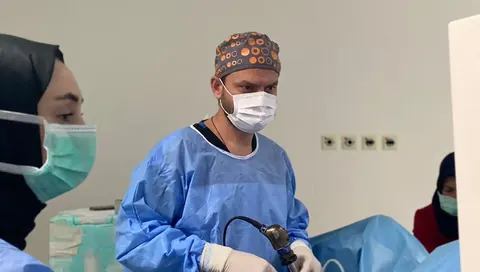
HOLEP Laser Prostate Surgery in Turkey
Read more
Laser Prostate Treatment in Turkey
Read more
Prostate Cancer Treatment in Turkey
Read more
Prostate Water Vapor Treatment in Turkey
Read more
Related guide articles
HOLEP or ThuFLEP?
Read more

Recovery Process After HOLEP
Read more
Prostate Reduction with Water Vapor
Read more