
Kidney Stone Treatment and Surgery in Turkey
Kidney stones are formed by the accumulation of some minerals in the kidneys. They are hard mineral masses that are formed. It is symptomatic with severe pain and blood in the urine. Small stones can fall off by drinking water; Large stones may require surgical intervention. Fluid consumption and a balanced diet are preventive.
We offer laser-assisted modern methods in the field of kidney stone treatment and kidney stone surgery in Bursa.
Kidney stone treatment prices and treatment options suitable for you are determined by evaluating after the examination. For detailed information and appointments, you can use the contact options below.
Get Information on WhatsApp Get Information by Phone 5,0· 107 Google reviews

Contents
- Laser kidney stone crushing in Bursa
- Laser kidney stone crushing methods in Bursa;
- What is kidney stone, how are its symptoms and treatment?
- What are the symptoms of kidney stones?
- What causes kidney stones?
- What are the types of kidney stones?
- How are kidney stones diagnosed?
- How is kidney stone treated?
- When is surgery necessary for kidney stones?
- What can be done to prevent kidney stones?
- Frequently Asked Questions About Kidney Stones
- Kidney Stone Treatment and Surgery in Bursa, Turkey
Laser kidney stone crushing in Bursa
Laser lithotripsy application is an important application that has come to the fore with the development of technology in the recent period. It is important to perform this procedure after a detailed analysis of the kidney stone.
With the lithotripsy process, which is usually applied by the endoscopic method, laser beams are delivered directly to the kidney stones. Laser lithotripsy is usually a procedure that does not require hospitalization. This application can be performed under spinal or general anesthesia. Generally, there is no feeling of pain or pain during the application. However, there may be a burning sensation and mild pain in the urine after the procedure.
Laser kidney stone crushing methods in Bursa;
RIRS (Intrarenal Surgery)
Laser Kidney Stone Intrarenal Surgery (RIRS) Bursa method, which is applied without incision for small-sized kidney stones, is preferred. In this method, the kidney is reached through the urinary tract and the stones are intervened with laser. It is extremely advantageous in terms of both patient comfort and recovery time.
Percutaneous Nephrolithotomy (PCNL)
In the treatment of large and deep-seated stones in the kidney, the Laser Kidney Stone Percutaneous Nephrolithotomy Treatment Bursa method is preferred. In this technique, the kidney is reached through a small incision in the lumbar region and the stones are broken down with the help of laser. It offers a very effective solution, especially for stones that do not fall with classical methods.
What is kidney stone, how are its symptoms and treatment?
On both sides of the lumbar region, there are kidneys, which are our organs responsible for cleaning the blood under the ribs. While the kidneys are performing their functions, it can lead to the accumulation of some minerals and salts. Kidney stones are known as mineral-containing hard masses that occur in the kidney ducts. It is not yet known how the functioning mechanism of the kidneys is disrupted and causes kidney stones to form.
Many factors can cause kidney stone formation. Among these, factors such as geography, nutrition, genetics, gender, etc. can be shown. Stones formed in the kidneys can be of different sizes. Kidney stones can be passed from the kidneys through urine in some people, while in others they can become trapped in the urinary tract. Common symptoms of kidney stones include; pain in the abdomen, groin and waist area, bloody urine, burning sensation during urination and frequent urination can be shown.
Kidney stones are generally more common in people between the ages of 30 and 60. Kidney stones can cause sudden and severe pain, and if left untreated, it can lead to kidney infections, kidney dysfunction or permanent kidney damage. Treatment of kidney stones may vary depending on the location and size of the stone, the symptoms seen and the type of stone.
What are the symptoms of kidney stones?
Kidney stones can pass spontaneously without showing any symptoms. Severe pain can be seen when kidney stones grow in size and move in the kidney or if the stones get stuck in the urethra. Pain in the back, side and abdomen, especially those that occur suddenly, can be counted among the most obvious indicators of kidney stones.
We can mention the common symptoms of kidney stones as follows;
- Pain radiating to the lower abdomen
- Pain that appears in the lower part of the ribs in the back
- Right or left flank pain
- Nausea
- Vomiting
- Blood in the urine
- Burning and painful sensation during urination
- Changes in the structure, density and color of urine
- In case of infection, symptoms such as fever and chills and chills may occur.
What causes kidney stones?
We can talk about many factors that affect the formation of kidney stones. Factors such as diabetes, obesity, consuming less water, consuming too much salt or sugary foods, kidney and urinary tract infections, and having a family history of kidney stones are important causes affecting the formation of kidney stones. However, there is no definite cause that can cause kidney stones.
We can mention some important factors that can cause kidney stones as follows;
- Not consuming enough water
- Family history of kidney stones
- Presence of some metabolic disorders
- Eating habits such as heavy salt use or excessive meat consumption
- Use of certain drugs
- Obesity
- Some other kidney diseases and kidney anomalies
- Insufficient physical activity
- Urinary tract infections
- Gout
The mentioned factors can be shown among the common causes that may contribute to the formation of kidney stones. If these factors, which can be shown among the important risk factors for kidney stones, are found, it is absolutely necessary to consult the relevant specialist.
What are the types of kidney stones?
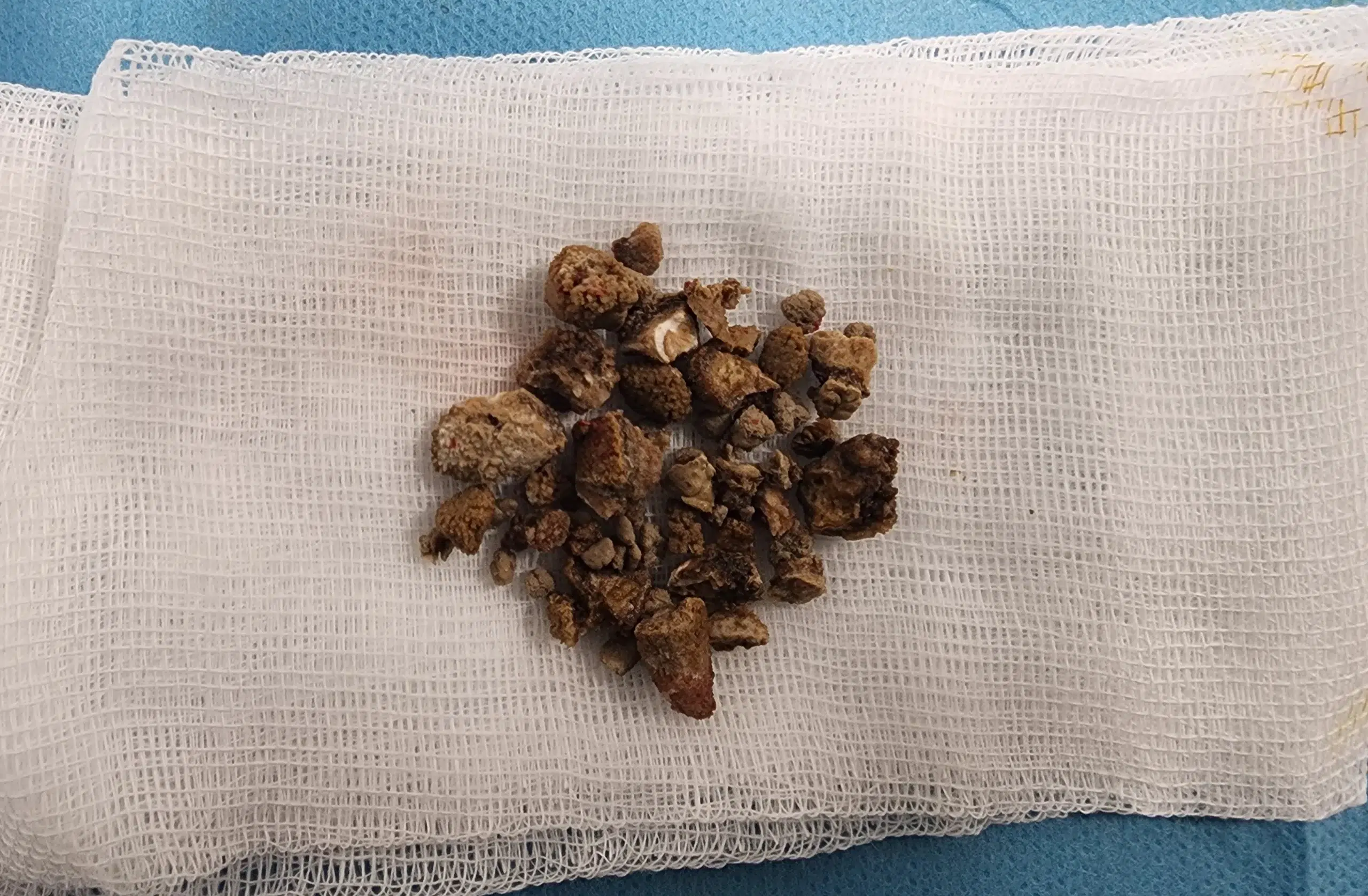
There are various types of kidney stones. Types of kidney stones can be caused by different components. Knowing the types of kidney stones is especially important in terms of treatment processes. In addition to the treatment process, precautions to be taken according to the type of kidney stone can also be known. Kidney stones are divided into 4 different types according to their content and formation type. The size of the stones can vary from the size of a grain of sand to the size of a pebble.
We can refer to the common types of kidney stones as follows;
Calcium Oxolate Stones: It is known as the most common type of kidney stone. The majority of stones formed in the kidney are usually calcium stones in the form of calcium oxalate. They occur as a result of the combination of calcium and oxalate in the urine. They usually occur as a result of insufficient fluid consumption and excessive calcium intake.
Cystine Stones: Cystine stones are generally rare. They occur as a result of a genetic disorder called cystinuria. It starts to be seen at an early age and can lead to kidney failure because they recur frequently.
Uric Acid Stones: Uric acid causes the formation of these stones. In particular, factors such as long-term continuation of a high-protein diet, insufficient fluid consumption and gout increase the amount of uric acid and cause the formation of such kidney stones.
Struvite stones: Such kidney stones occur as a result of urinary system infections. These types of kidney stones are stones that usually grow rapidly without symptoms. It is more common in women.
How are kidney stones diagnosed?
Various diagnostic methods can be used to determine the presence of kidney stones, determine their size, and identify the location and type of stones. Detailed examination is important in the diagnosis of kidney stones. At the same time, various examinations should be performed in order to make a clear diagnosis.
Ultrasound and computed tomography (CT) are the main imaging methods that can be used in the diagnosis of kidney stones. X-rays may also be required for diagnosis. With imaging methods, the location of the stone and the size of the stone are also determined. Different diagnostic and imaging methods can be used for each patient. The patient’s general health status and disease history are evaluated and the appropriate imaging method is determined.
We can mention the various methods that can be used for kidney stone diagnosis as follows;
- Various imaging modalities
- Computed tomography (CT)
- Ultrasound
- Blood test
- Urine test
How is kidney stone treated?
In terms of the treatment of kidney stones, the majority of stones smaller than 4 mm can pass spontaneously without any intervention. It can be said that half of the stones between 4-7mm and stones larger than 8mm rarely pass spontaneously. If kidney stones have started to move in the urinary tract and are small enough not to require any intervention, the stone can be helped to pass by consuming plenty of water and increasing movement.
However, a doctor’s intervention may be required for stones larger than 5 mm. A treatment plan is prepared by the urologist according to factors such as the location and size of the stone, the general health status and age of the patient. While home treatment methods are recommended for small stones, for large stones; Lithotripsy, some medications and surgical methods may be recommended.
We can mention some of the methods that can be used in the treatment of kidney stones as follows;
- Consuming an average of 2-3 liters of water per day, increasing water consumption
- The use of alpha-blocker-style drugs that can be prescribed by a doctor and help pass kidney stones
- Using some effective pain relievers used for pain control
- Surgical interventions
- Interventions that do not require surgery
When is surgery necessary for kidney stones?
In cases where kidney stones do not pass spontaneously or continue to grow despite treatment, surgery may be required. Surgery may also be preferred in cases of recurrent urinary tract infections, kidney damage and bleeding in the urine.
We can mention some conditions that may require surgical intervention for kidney stones as follows;
- Recurrent kidney stones after healing
- Obstruction, especially in the urinary tract that prevents the flow of urine
- Stones larger than 2 cm in size
- Recurrent infection, severe pain
- Observation of severe symptoms such as high fever, vomiting, or kidney dysfunction
In such cases, kidney stone surgery may be necessary. Whether an operation is needed; It is decided by the relevant specialist according to factors such as the general health status of the patient, the characteristics of the stones and the severity of the symptoms.
What can be done to prevent kidney stones?
Fluid consumption, especially water, is in the first place among the things to be done to prevent kidney stones. Since the causes of kidney stones may differ, the precautions to be taken may also vary, especially according to the diet. It is very important to pay attention to water consumption above the daily urine output. Clear urine color can be considered an important sign that enough water is consumed.
Especially according to the type of kidney stone, a personalized nutrition program can be prepared together with a urologist and dietitian. Different drugs can be used depending on the type of kidney stone. Reducing daily refined salt consumption is also an important step that can be taken to prevent kidney stone formation. Balanced nutrition rules should also be taken into consideration when preparing a diet.
Frequently Asked Questions About Kidney Stones
Who gets kidney stones?
Kidney stones can occur in both men and women, but they are more common in men. It is more common in people who do not drink enough water, consume excessive protein, have a genetic predisposition and have certain metabolic disorders.
What are the symptoms of kidney stones?
- Sudden and severe pain in the lower back and side area
- Blood in urine
- Frequent urination and burning in the urine
- Nausea and vomiting
- Cloudy or foul-smelling urine
Why do kidney stones occur?
Insufficient fluid intake, excessive salt or protein consumption, certain medications and genetic factors predispose to stone formation.
Do kidney stones recur?
Yes, individuals who have formed stones once have a high risk of re-forming stones. Therefore, lifestyle changes and regular follow-up are important.
Is it painful to pass kidney stones?
Yes, the process of passing stones can often be quite painful. The pain varies depending on the size of the stone and the condition of being trapped in the urinary tract.
At what size does a kidney stone pass spontaneously?
Generally, stones smaller than 5 mm can pass on their own. For larger stones, medical intervention may be necessary.
Kidney Stone Treatment and Surgery in Bursa, Turkey
Op. Dr. Tuğrul Türker is a urologist in Bursa, Turkey, and sees patients at Private Doruk Nilüfer Hospital. Bursa is reached from Istanbul by road over the Osmangazi Bridge, by ferry across the Sea of Marmara, or through Yenişehir Airport. If you are travelling from abroad for Kidney Stone Treatment and Surgery, you can send your previous reports and test results on WhatsApp and we will write back about a suitable date. Appointment requests are confirmed only after we reply.
How does the treatment process work?
-
Contact
You contact us via WhatsApp, phone or the form; a suitable examination day is planned for you.
-
Examination and tests
Your complaints are listened to and you are examined; tests are requested if necessary.
-
Treatment plan
The results are evaluated; suitable treatment options and the process are explained to you in detail.
-
Treatment and follow-up
The treatment is carried out; recovery is followed up with check-up visits.
This page is for general information only. Always consult your doctor for diagnosis and treatment.

Patient Reviews
5,0 · 107 Google reviewsGoogle reviews (opens in a new tab) DoktorTakvimi profile (opens in a new tab)
For patients travelling from abroad
Here is how your treatment journey works and how to reach us.
Op. Dr. Tuğrul Türker works at Private Doruk Nilüfer Hospital, which holds the Turkish Ministry of Health authorisation for international health tourism.
- Free initial assessment
- Airport transfer
- Accommodation support
- Translator support
-
Why
Op. Dr. Tuğrul Türker
A graduate of Cerrahpaşa Faculty of Medicine and a urology specialist since 2012. He performs Da Vinci robotic surgery and laser stone and prostate surgery at Private Doruk Nilüfer Hospital.
View -
Why
Bursa, Türkiye
Bursa is a few hours from Istanbul's two international airports by road and ferry, and the city has an airport of its own. Treatment takes place in a fully equipped private hospital.
View -
How it works
The process and getting in touch
Message us on WhatsApp and share the test results you have. Dr. Türker reviews them, a suitable day is agreed, and the examination and treatment take place at the hospital.
Message on WhatsApp
Related treatments

Laser Ureteral Stone Treatment in Turkey
Read more
Related guide articles

Kidney Stone Treatment with RIRS Method
Read more
Endoscopic Bladder Stone Treatment
Read more
Methods for Passing Ureteral Stones
Read more