
Laser Prostate Treatment in Turkey
While drug treatments are applied in the first stage of the treatment of prostate diseases, modern surgical methods come into play in advanced cases. Today, laser-based surgeries such as ThuFLEP laser prostate surgery (Thulium Fiber Laser Prostatectomy) and HoLEP laser prostate surgery (Holmium Laser Prostatectomy) offer patients the advantage of minimal bleeding, shorter hospitalization time and rapid recovery. These methods are modern and safe options preferred over open surgery, especially in large prostates.
For detailed information about prostate treatment methods and prices and to make an appointment , you can contact us from the contact options below.
Get Information on WhatsApp Get Information by Phone 5,0· 107 Google reviews
Contents
- What is the prostate?
- Why does the prostate enlarge?
- What are the symptoms of prostate?
- What are prostate diseases?
- How are prostate diseases diagnosed?
- What are the prostate treatment methods?
- ThuLEP and HoLEP method in prostate treatment
- HoLEP method
- ThuFLEP method
- Laser Prostate Treatment in Bursa, Turkey
What is the prostate?
The prostate, which is an important part of the male reproductive system, is about the size of a walnut and weighs 20 grams. Seminal vesicles are 2 pairs of much smaller glands and are attached to both sides of the prostate. The prostate is located below the bladder and in front of the rectum. Men with an enlarged prostate have difficulty urinating and can also disrupt the flow of urine from the bladder. The main task of the prostate and seminal vesicles is to produce the fluid necessary for semen. Prostate cancer formation can start from the prostate gland and spread to the seminal vesicles in some cases.
Why does the prostate enlarge?
There are various causes of prostate gland enlargement. The effect of the male hormones testosterone and estrogen and old age are known as important causes. Genetic predisposition can be shown among the factors affecting the growth of the prostate. In men, the prostate grows up to about 2 times in early adolescence.
After the age of 40, prostate enlargement is seen in all men, at certain levels. While prostate enlargement is seen in half of the men over the age of 50, this rate increases after the age of 60. Medication or surgical intervention are among the methods used in the treatment of prostate enlargement.
Prostate enlargement usually has a benign development. This benign growth continues at various speeds, especially starting from the age of 40 until the end of life. Although benign prostatic hyperplasia (BPH) can be seen more with aging, the exact cause is not yet known for sure. Prostate enlargement is quite common in our society, but it does not cause the same level of problem in every man. Prostate enlargement can make it difficult for a person to urinate as a result of the prostate compressing the urinary tract. BPH, which can be seen more frequently especially with age, can significantly affect a person’s daily life, although it does not cause a serious health problem.
What are the symptoms of prostate?
We mentioned that the prostate grows especially due to age. The enlarged prostate can compress the urinary canal passing through it. As prostate enlargement continues over time, the bladder muscles have to contract more strongly and fatigue occurs in these muscles. In this case, conditions such as slowing down of urine flow, dripping or forked urination while urinating, or the feeling that there is still urine after urinating can be observed.
We can mention some important symptoms that may occur with prostate enlargement as follows;
- Urge to urinate more often
- Bleeding, burning or pain during urination
- Persistence of urine dripping after urination
- Feeling that the bladder is not emptying completely
- Urinary incontinence
- Intermittent or little urination
- Urgent feeling of urinating
- Sexual dysfunctions
- Urge to urinate more, especially at night
What are prostate diseases?
Prostate-related diseases can be commonly observed in men over the age of 50. Prostate diseases, which can be seen in men of all ages, are more common, especially after a certain age. Prostate-related health problems can range from prostate enlargement to prostate cancer. As we age, men see an enlargement of the prostate and the enlargement of the prostate can cause some health problems.
We can mention some important prostate diseases that can be observed as follows;
Benign Prostate Enlargement (BPH): It is known as benign enlargement of the prostate gland. It is a disorder caused by benign enlargement of the prostate gland. With the prostate compressing the urinary tract, difficulty in urination can be seen. Benign prostate enlargement is a disease that can be seen frequently in older men and can significantly affect a person’s quality of life, although it does not cause serious health problems. Common treatment methods for prostate enlargement include surgical interventions and medication.
Prostate Inflammation (Prostatitis): This disease can be specified as inflammation of the prostate gland. The prostate gland, which swells and enlarges due to infection, can cause conditions such as pain. Prostatitis, which can be seen in men of all ages, can sometimes be caused by bacteria. In the treatment of prostatitis, it is especially common to use antibiotics and certain types of drugs.
Prostate Cancer: The uncontrolled growth and proliferation of cancer cells in the prostate gland is known as prostate cancer. Since prostate cancer is a relatively slow progressing type of cancer, it is difficult to diagnose in the early stages of cancer. In the later stages of the disease; It can cause symptoms such as bloody urine, difficulty urinating, stiffness and pain in the genital area. Prostate cancer treatment may vary depending on the general health status of the person, the spread and stage of the cancer.
Although prostate diseases can occur for different reasons, their symptoms may be similar. For this reason, when symptoms related to prostate diseases are observed, the relevant specialist doctor should be consulted.
How are prostate diseases diagnosed?
Prostate diseases can be diagnosed with some diagnostic methods and tests. Among these methods, the most frequently applied ones are; digital prostate examination, PSA blood test, urine flow examination and transrectal ultrasound. After the diagnosis of prostate diseases, the degree of the disease and the appropriate treatment method are determined. In cases where prostate cancer is suspected, various imaging methods such as multiparametric prostate MRI, ultrasonography, etc. can be used. Prostate biopsy can also be counted among the diagnostic methods.
What are the prostate treatment methods?
Prostate-related health problems may vary depending on the disease, symptoms and severity of the disease. Different treatment protocols can be applied according to prostate inflammation, prostate cancer or prostate enlargement. The treatment process may vary depending on the patient’s general health condition and the severity of the disease.
We can summarize the general treatment processes that can be used in prostate treatment as follows;
- Performing the tests and examinations necessary for diagnosis
- After the diagnosis is made, treatment options are evaluated and the appropriate treatment method is determined.
- Switching to treatment applications
- Regular follow-up and controls during and after the treatment process
Nevertheless; We can also mention the general treatment processes of prostate diseases as follows;
Prostate Cancer Treatment Applications: The treatment methods that can be preferred in the treatment of prostate cancer may vary depending on the growth rate of the cancer, the general health status of the patient and the spread of the cancer. Follow-up is recommended before treatment, especially if cancer is diagnosed at an early stage. Surgical intervention is known as an effective and common treatment method for prostate cancer. The aim of the surgical operation is to completely remove the prostate. Active surveillance, on the other hand, can be determined as a treatment option for the type of cancer that does not show symptoms, is expected to grow very slowly and is limited to a small area of the prostate. Active monitoring can be seen as an option for those who are older and have another serious health problem.
Prostatitis Treatment Applications: Prostatitis treatment may vary depending on the diagnosed prostatitis condition and symptoms. In cases where bacterial infection is the underlying cause of prostatitis, antibiotics are often prescribed. Anti-inflammatory drugs can also help reduce inflammation and pain. There is no definitive way to prevent prostate inflammation. However, some important changes in one’s lifestyle can significantly contribute to keeping the prostate gland healthy.
Prostate Enlargement Treatment Applications: Benign prostatic hyperplasia (BPH) is an important health problem that can be seen frequently in men and can cause difficulties in urinating as the prostate gland grows due to aging. Frequently used treatment methods for prostate enlargement include drug treatments and surgical intervention. Surgical intervention is usually performed in cases that can be described as more severe and do not respond to drug therapy, and it is aimed to remove or shrink the prostate. Drug therapy includes the use of drugs that can help shrink the prostate.
ThuLEP and HoLEP method in prostate treatment
Among today’s modern medical techniques, minimally invasive methods applied for treatment are important. HoLEP (Holmium Laser Enucleation of the Prostate) and ThuLEP (Thulium Laser Enucleation of the State) are two important methods that stand out especially in this field. Both methods are minimally invasive surgical techniques and have many advantages, especially compared to traditional surgical methods.
HoLEP method
This technique describes the removal of prostate tissue using a Holmium laser. It is an important practice that emerged in New Zealand in the late 1990s. With this method, the risk of bleeding is reduced by removing large parts of the prostate gland and makes a significant contribution to the healing process. It is an important advantage that the technique can be applied to prostates of all sizes. No incisions are made during this procedure through the urethra, and in this case, it minimizes the risk of infection and speeds up the healing process.
We can mention the advantages of the HoLEP method as follows;
- Since it can be suitable for prostates of all sizes, it allows a wide range of patients to benefit from it.
- A rapid recovery process is observed, patients can usually be discharged within 1-2 days.
- By minimizing the risk of prostate regrowth, long-term treatment is offered.
- Since no incisions are made during the procedure, the risk of infection and bleeding is very low.
For detailed information, you can read our HoLEP laser prostate surgery article here.
ThuFLEP method
Similarly, Thulium laser technology is used in this technique. It is ensured that the prostate tissues enlarged in the urinary canal are cut and removed and the urinary canal is opened up to the prostate capsule. This method has some technical differences compared to the HoLEP method. The ThuLEP method offers opportunities such as less bleeding, better cutting power, and shorter recovery times.
We can mention the advantages of the ThuLEP method as follows;
- Reducing the risk of bleeding with good cutting power offers an important control opportunity, especially during the operation.
- It minimizes the risk of urinary incontinence by protecting the urinary retention system.
- It provides a safe treatment opportunity by causing less tissue and cell damage.
- The risk of damage to surrounding tissues is also low.
- By offering faster recovery, hospital stays are reduced.
For more information, you can visit our ThuFLEP laser prostate surgery page.
Laser Prostate Treatment in Bursa, Turkey
Op. Dr. Tuğrul Türker is a urologist in Bursa, Turkey, and sees patients at Private Doruk Nilüfer Hospital. Bursa is reached from Istanbul by road over the Osmangazi Bridge, by ferry across the Sea of Marmara, or through Yenişehir Airport. If you are travelling from abroad for Laser Prostate Treatment, you can send your previous reports and test results on WhatsApp and we will write back about a suitable date. Appointment requests are confirmed only after we reply.
How does the treatment process work?
-
Contact
You contact us via WhatsApp, phone or the form; a suitable examination day is planned for you.
-
Examination and tests
Your complaints are listened to and you are examined; tests are requested if necessary.
-
Treatment plan
The results are evaluated; suitable treatment options and the process are explained to you in detail.
-
Treatment and follow-up
The treatment is carried out; recovery is followed up with check-up visits.
This page is for general information only. Always consult your doctor for diagnosis and treatment.

Patient Reviews
5,0 · 107 Google reviewsGoogle reviews (opens in a new tab) DoktorTakvimi profile (opens in a new tab)
For patients travelling from abroad
Here is how your treatment journey works and how to reach us.
Op. Dr. Tuğrul Türker works at Private Doruk Nilüfer Hospital, which holds the Turkish Ministry of Health authorisation for international health tourism.
- Free initial assessment
- Airport transfer
- Accommodation support
- Translator support
-
Why
Op. Dr. Tuğrul Türker
A graduate of Cerrahpaşa Faculty of Medicine and a urology specialist since 2012. He performs Da Vinci robotic surgery and laser stone and prostate surgery at Private Doruk Nilüfer Hospital.
View -
Why
Bursa, Türkiye
Bursa is a few hours from Istanbul's two international airports by road and ferry, and the city has an airport of its own. Treatment takes place in a fully equipped private hospital.
View -
How it works
The process and getting in touch
Message us on WhatsApp and share the test results you have. Dr. Türker reviews them, a suitable day is agreed, and the examination and treatment take place at the hospital.
Message on WhatsApp
Related treatments
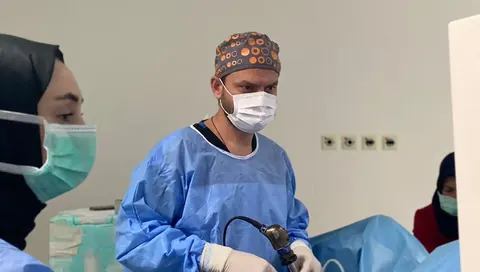
HOLEP Laser Prostate Surgery in Turkey
Read more
Prostate Cancer Treatment in Turkey
Read more
Prostate Water Vapor Treatment in Turkey
Read more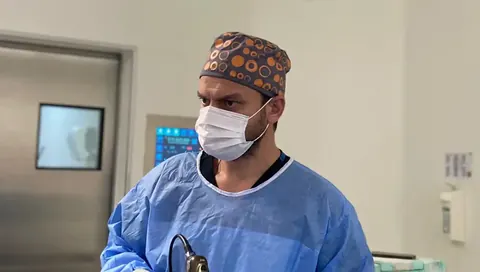
ThuFLEP Laser Prostate Surgery in Turkey
Read more
Related guide articles
HOLEP or ThuFLEP?
Read more
Recovery Process After HOLEP
Read more
Prostate Reduction with Water Vapor
Read more