
ESWT (Shock Wave) Treatment in Turkey
Shock wave therapy (ESWT) in urology is a modern, non-invasive (surgery-free) method used to treat various male health conditions. This treatment is particularly applied for conditions such as erectile dysfunction, chronic pelvic pain syndrome/prostatitis, and Peyronie’s disease.
ESWT works by directing low-intensity shock waves to specific areas. These waves create micro-level damage in the applied area, triggering the body’s natural healing mechanism. This process promotes new blood vessel formation (angiogenesis), increases blood flow, and reduces inflammation. In erectile dysfunction treatment, the aim is to provide healthier and sustainable erections by increasing blood flow to the penis. In Peyronie’s disease, the goal is to soften the plaque tissue and reduce curvature.
It is typically planned as a course of 6-12 sessions, applied 1-2 times per week. Pain during the procedure is minimal and does not require anesthesia. Side effects are generally mild and temporary. The treatment is an effective option that does not require surgery or medication therapy and has a short recovery process.
Get Information on WhatsApp Get Information by Phone 5,0· 107 Google reviews

Contents
- What is ESWT (Extracorporeal Shock Wave Therapy)?
- What are the application areas of ESWT (Extracorporeal Shock Wave Therapy)?
- Who is ESWT (Extracorporeal Shock Wave Therapy) performed on?
- How is ESWT (Extracorporeal Shock Wave Therapy) applied?
- What are the advantages of ESWT (Extracorporeal Shock Wave Therapy)?
- Are there any side effects of ESWT (Extracorporeal Shock Wave Therapy)?
- Frequently asked questions about ESWT (Extracorporeal Shock Wave Therapy)
- ESWT (Shock Wave) Treatment in Bursa, Turkey
ESWT treatment prices and the treatment alternative to be applied are determined after the examination. For detailed information and appointments, you can use the contact options below.
What is ESWT (Extracorporeal Shock Wave Therapy)?
ESWT, or Extracorporeal Shock Wave Therapy, is a non-invasive method that creates therapeutic effects in the body using low-intensity shock waves applied from outside the body. In urology, this treatment offers an effective solution for some common problems seen especially in men. These problems include:
- Erectile dysfunction
- Chronic prostatitis / chronic pelvic pain syndrome
- Peyronie’s disease (penile curvature and plaque formation)
ESWT promotes new blood vessel formation (angiogenesis), increases blood flow, and supports cellular renewal by creating microtraumas in the tissue where it is applied. This accelerates natural healing processes. In erectile dysfunction, the aim is to increase blood flow to the penis, while in prostatitis, the goal is to reduce inflammation and pain.
The application is usually planned as 15-20 minute sessions, 1-2 times a week, and the patient can immediately return to daily life. ESWT is a modern treatment option that does not require surgical intervention, is painless, safe, and has very low side effects. It is a promising alternative especially for patients who do not respond to drug treatments or cannot use medication.
What are the application areas of ESWT (Extracorporeal Shock Wave Therapy)?
In urology, ESWT is commonly applied in the following male health problems:
Erectile Dysfunction
- By applying low-intensity shock waves to the penis, the vascular structure is strengthened and blood flow is increased.
- It is especially effective in vascular-related erectile problems.
- It is preferred in patients who do not respond to drug treatments or do not want to use medication.
Peyronie’s Disease
- In this disease characterized by plaque formation and curvature in penile tissue, shock waves help reduce curvature by softening the plaques.
- It reduces pain, increases flexibility, and in some cases can provide healing without the need for surgery.
Chronic Prostatitis / Chronic Pelvic Pain Syndrome
- Pain, pelvic pressure, and urinary complaints are reduced thanks to shock waves applied to the prostate and surrounding area.
- It shows anti-inflammatory effect and accelerates tissue healing.
Penile Rehabilitation
- It is used to preserve and support penile function after prostate surgery.
- It supports nerve and vascular health by increasing tissue oxygenation.
Outside of these areas, research continues on other indications such as bladder dysfunctions and premature ejaculation treatment in some cases. However, the main areas with proven clinical efficacy are the three main groups above.
Who is ESWT (Extracorporeal Shock Wave Therapy) performed on?
Shock wave therapy (ESWT) in urology can be safely applied to patients with the following characteristics:
- Those with mild to moderate erectile dysfunction
- Those who do not get sufficient response from medications or do not want to use medication
- Those seeking treatment to increase blood flow to the penis
- Patients with penile curvature and plaque-related pain complaints
- Patients whose curvature does not require surgery
- Patients experiencing long-term pain, urinary complaints, and pelvic discomfort who do not respond to antibiotics and classical treatments
- Patients who want to preserve penile functions after prostate cancer
- Those who want to accelerate healing after surgery
- Generally adult men over 18 years old
- Individuals whose general health condition does not pose an obstacle to shock wave therapy
However, it is necessary to be evaluated by a urology specialist before treatment. Because there may be contraindications for some patients (such as active infection, tumor, bleeding disorders, presence of a pacemaker).
How is ESWT (Extracorporeal Shock Wave Therapy) applied?
In urology, ESWT (Extracorporeal Shock Wave Therapy) is applied as a painless and short procedure that does not require surgical intervention for the patient. The procedure steps are as follows:
Preparation Phase
- The patient is taken into the session without needing any special preparation before the application.
- The treatment area (penis, pelvic area, etc.) is determined.
- Gel is applied to the area to facilitate the transmission of shock waves.
Application of the Device
- The shock wave generator is brought into contact with the treatment area with a special head.
- Low-intensity sound waves from the device are sent to the target tissue at a specific frequency and energy level.
- During the session, the patient usually feels only a slight vibration or tingling.
Session Duration and Frequency
- Each session lasts approximately 15-20 minutes.
- The application is usually planned 1-2 times a week, for a total of 6-12 sessions.
- After the session, the patient can immediately return to daily life, no recovery period is required.
Follow-up and Evaluation
- The patient is regularly evaluated throughout the treatment process.
- If necessary, the treatment protocol is updated according to the patient’s needs.
- After the treatment is completed, effects are usually felt within a few weeks.
Shock wave therapy is a safe and effective method when applied under the control of a specialist physician. However, the success of the treatment may vary depending on the severity of the disease, its duration, and individual factors.
What are the advantages of ESWT (Extracorporeal Shock Wave Therapy)?
Shock wave therapy has emerged as a safe and effective method that has become increasingly widespread in the field of urology in recent years. Here are the main advantages of this treatment method:
- Non-Surgical and Non-Invasive Method
- Sessions are usually painless or pass with a very slight discomfort.
- One can immediately return to daily life during and after the procedure.
- It increases new blood vessel formation (angiogenesis) in the body.
- It improves blood flow and accelerates tissue renewal.
- It supports cellular repair.
- Serious side effects are rare, apart from mild redness, bruising, or temporary sensitivity.
- It works locally, without systemic effects compared to medications.
- It is suitable for patients who want to avoid the side effects of medications in conditions such as erectile dysfunction.
- It can be effective in cases resistant to drugs, such as chronic prostatitis.
- The treatment can be repeated if necessary.
- It can be used in combination with other treatment methods (medication, exercise, psychotherapy).
These advantages have made ESWT a treatment option that both increases patient comfort and is scientifically supported in terms of effectiveness. However, its suitability for each patient must be evaluated by a urology specialist.
Are there any side effects of ESWT (Extracorporeal Shock Wave Therapy)?
Shock wave therapy (ESWT) is generally a safe and well-tolerated method. However, as with any medical intervention, some mild and temporary side effects may be observed. Serious complications are extremely rare.
Mild Side Effects
- Mild pain or discomfort in the application area
- Redness, bruising, or swelling
- Temporary sensitivity in the skin
- Mild tingling or numbness sensation
Who Should It Be Applied Carefully To?
- Those with bleeding disorders or using blood thinners
- Areas with active infection, tumor, or open wounds
- Patients with pacemakers
- To the area after recent surgical operation
In general, ESWT is a much safer treatment option compared to surgery. When side effects occur, they are usually mild and resolve on their own in a short time. These risks can be minimized with detailed medical evaluation before application.
Frequently asked questions about ESWT (Extracorporeal Shock Wave Therapy)
What is ESWT?
ESWT stands for “Extracorporeal Shock Wave Therapy.” It is a non-invasive (surgery-free) treatment method that promotes tissue healing by increasing blood flow using low-intensity shock waves applied from outside the body.
Is the treatment painful?
It is generally painless. There may only be a slight discomfort, tingling, or pressure sensation during application.
How many sessions are applied?
The treatment is usually planned as 6-12 sessions, once or twice a week. The number of sessions may vary depending on the type and severity of the disease.
When is the effect seen?
Initial effects are usually felt within 2-4 weeks. Maximum effect may occur within a few months after the end of treatment.
Does it provide a permanent solution?
It can provide long-term benefits, especially in mild to moderate cases of erectile dysfunction and prostatitis. However, the duration of effect may vary from person to person.
Are there any side effects?
Common side effects are mild; slight redness, swelling, or bruising may be seen at the application site. Serious complications are extremely rare.
Who is it not applied to?
- Those with bleeding disorders
- Those with active infection or tumor
- Those with pacemakers
- Those with open wounds in the area where the shock wave will be applied
What should I pay attention to after treatment?
It does not require special care. You can immediately return to daily life. However, it is important to follow your doctor’s recommendations.
Is ESWT more effective compared to other treatments?
Being a surgery-free and drug-free alternative makes ESWT advantageous. However, the specialist physician should decide which treatment is more appropriate. In some cases, ESWT can be combined with medication or surgery.
ESWT (Shock Wave) Treatment in Bursa, Turkey
Op. Dr. Tuğrul Türker is a urologist in Bursa, Turkey, and sees patients at Private Doruk Nilüfer Hospital. Bursa is reached from Istanbul by road over the Osmangazi Bridge, by ferry across the Sea of Marmara, or through Yenişehir Airport. If you are travelling from abroad for ESWT (Shock Wave) Treatment, you can send your previous reports and test results on WhatsApp and we will write back about a suitable date. Appointment requests are confirmed only after we reply.
How does the treatment process work?
-
Contact
You contact us via WhatsApp, phone or the form; a suitable examination day is planned for you.
-
Examination and tests
Your complaints are listened to and you are examined; tests are requested if necessary.
-
Treatment plan
The results are evaluated; suitable treatment options and the process are explained to you in detail.
-
Treatment and follow-up
The treatment is carried out; recovery is followed up with check-up visits.
This page is for general information only. Always consult your doctor for diagnosis and treatment.

Patient Reviews
5,0 · 107 Google reviewsGoogle reviews (opens in a new tab) DoktorTakvimi profile (opens in a new tab)
For patients travelling from abroad
Here is how your treatment journey works and how to reach us.
Op. Dr. Tuğrul Türker works at Private Doruk Nilüfer Hospital, which holds the Turkish Ministry of Health authorisation for international health tourism.
- Free initial assessment
- Airport transfer
- Accommodation support
- Translator support
-
Why
Op. Dr. Tuğrul Türker
A graduate of Cerrahpaşa Faculty of Medicine and a urology specialist since 2012. He performs Da Vinci robotic surgery and laser stone and prostate surgery at Private Doruk Nilüfer Hospital.
View -
Why
Bursa, Türkiye
Bursa is a few hours from Istanbul's two international airports by road and ferry, and the city has an airport of its own. Treatment takes place in a fully equipped private hospital.
View -
How it works
The process and getting in touch
Message us on WhatsApp and share the test results you have. Dr. Türker reviews them, a suitable day is agreed, and the examination and treatment take place at the hospital.
Message on WhatsApp
Related treatments
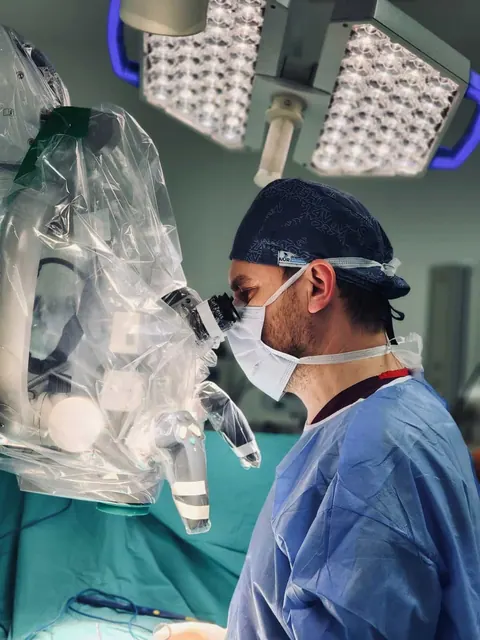
Varicocele Treatment in Turkey
Read more
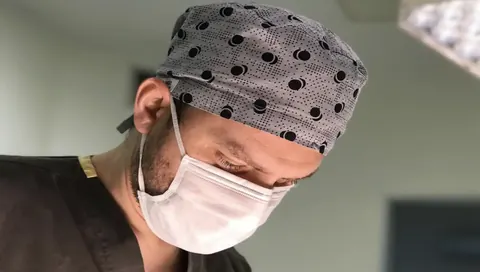
Penile Curvature Treatment in Turkey
Read more
Related guide articles

Is ESWT Application Painful?
Read more